Hale Fermented Home

Category

Wellness & Science

16 articles

Stop Counting Strains — Your Gut Wants a Crowd, Not a Clone Army

Stop Counting Strains — Your Gut Wants a Crowd, Not a Clone Army

The probiotic supplement industry wants you to believe that more strains in a capsule means a healthier gut. But emerging research tells a more complicated — and more delicious — story. It turns out that microbial diversity, not sheer volume, is what your gut is actually after.

Why Your Homemade Kombucha Tastes Weird (And Why That's Actually the Point)

Why Your Homemade Kombucha Tastes Weird (And Why That's Actually the Point)

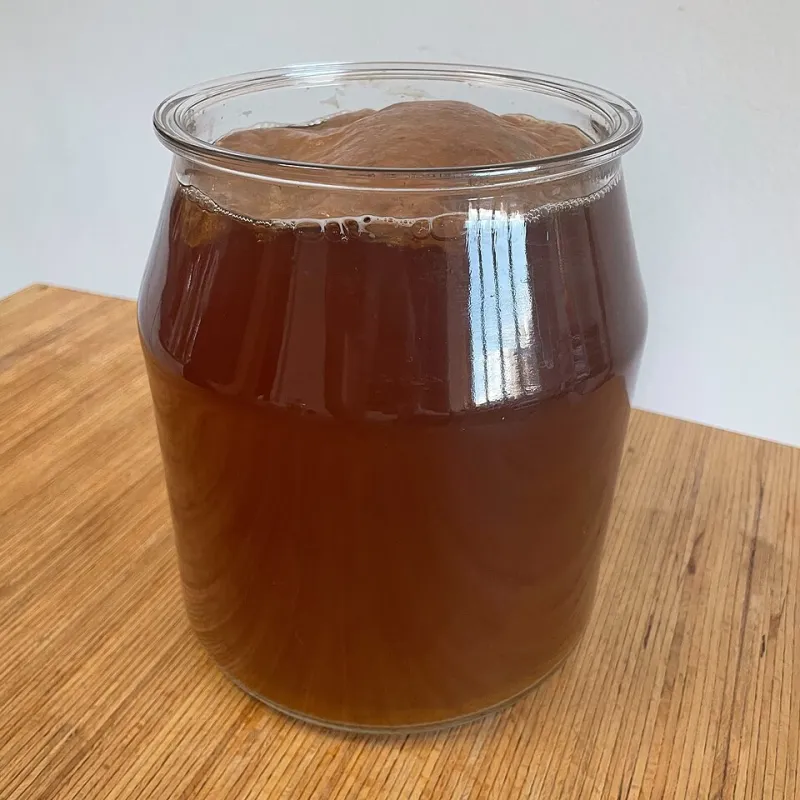
Your kitchen-brewed kombucha doesn't taste like the stuff in the bottle — and there are real scientific reasons for that. But before you chalk it up to failure, consider this: the differences might be telling you something valuable about fermentation itself. Here's what's actually going on.

Your Gut Needs a Vacation From Probiotics (Yes, Really)

Your Gut Needs a Vacation From Probiotics (Yes, Really)

We've built an entire wellness identity around eating fermented foods every single day — but what if that's not actually how your gut works best? Ancient eating patterns and emerging research suggest that cycling on and off fermented foods might unlock benefits that constant consumption never could.

Feeling Worse After Going All-In on Fermented Foods? Here's What's Actually Happening

Feeling Worse After Going All-In on Fermented Foods? Here's What's Actually Happening

You cleaned up your diet, added kombucha, kimchi, and kefir to your daily routine, and expected to feel amazing. Instead, you're exhausted, foggy, and wondering if you made a terrible mistake. The good news: your gut isn't broken — but there's a real science-backed reason this happens, and it's more common than you think.

Your Kitchen Is a Climate Zone: How Seasonal Temperatures Make or Break a Ferment

Your Kitchen Is a Climate Zone: How Seasonal Temperatures Make or Break a Ferment

That 'room temperature' instruction on your fermentation recipe is doing a lot of heavy lifting — and it might be lying to you. Across the US, a kitchen in July in Houston and a basement in January in Vermont are practically different planets when it comes to microbial activity. Here's what the science actually says, and how to work with your environment instead of fighting it.

What's Actually Living Inside That Bottle of Store-Bought Kombucha?

What's Actually Living Inside That Bottle of Store-Bought Kombucha?

That trendy bottle of kombucha at the checkout counter might have a lot less going on inside than the label suggests. Between pasteurization, heat treatment, and some pretty fuzzy FDA labeling rules, the 'live cultures' promise on commercial kombucha is murkier than most people realize. Here's what's really in that bottle.

When Good Bacteria Clash: The Surprising Conflict Between Your Supplements and Your Homemade Ferments

When Good Bacteria Clash: The Surprising Conflict Between Your Supplements and Your Homemade Ferments

Popping a probiotic capsule while eating your homemade kimchi sounds like a gut-health power move — but the science says it might actually be working against you. The microbial world inside your digestive system is more like a competitive ecosystem than a welcome party, and not all beneficial bacteria play nice together. Here's what you need to know before you double down on probiotics.

The Hidden Price Tag on That Jar of Homemade Kimchi (It's Higher Than You Think)

The Hidden Price Tag on That Jar of Homemade Kimchi (It's Higher Than You Think)

Home fermentation feels like the thrifty choice — but once you add up the vessels, cultures, utilities, and your own time, the math gets complicated fast. We break down every cost most fermenters never think to count, and help you figure out whether DIY or supporting a small producer actually makes more sense for your life.

More Isn't Always More: The Case for Slowing Down on Fermented Foods

Fermented foods are genuinely good for most people — but the idea that more is always better deserves a serious second look. For some digestive systems, piling on the kimchi and kombucha can actually make things worse. Here's what the science says, and how to figure out what your gut actually needs.

Homemade vs. Store-Bought: The Real Price of That Jar of Kimchi

Homemade vs. Store-Bought: The Real Price of That Jar of Kimchi

That $12 jar of kimchi at Whole Foods isn't just paying for cabbage and gochugaru — you're subsidizing packaging, refrigerated shipping, and a shelf life engineered for retail survival. Breaking down the actual math of home fermentation reveals something surprising: making your own isn't just cheaper, it's a fundamentally different relationship with food.

Dead on Delivery: The Dirty Secret Behind Most 'Probiotic' Foods at the Grocery Store

That bottle of kombucha or tub of yogurt might be marketed as a gut health powerhouse, but there's a good chance the beneficial bacteria inside are already dead by the time you crack it open. Commercial fermentation shortcuts—pasteurization chief among them—routinely wipe out the very cultures companies are selling you on. Here's how to tell the difference between a living ferment and a very expensive marketing claim.

Your Gut Is Talking to Your Brain — Are You Listening?

Emerging research is drawing a surprisingly direct line between the bacteria living in your digestive tract and the way you feel, think, and cope. We talked to nutritionists and neuroscientists about what the science actually says — and why fermented foods like kimchi and kombucha are showing up in more and more mental health conversations across America.